Stainless steel resists corrosion because of a thin chromium oxide passive film. Fabrication damages that film in three ways at once, and a plant that skips the clean-up stage often sees rust within weeks and blames the grade.
What fabrication does
- Heat tint and scale. Welding leaves an oxide layer and a chromium depleted zone underneath. The coloured band next to a weld is not cosmetic — it is the weakest part of the joint.
- Embedded iron. Carbon steel contamination from grinding discs, wire brushes, slings, benches and even forklift forks leaves free iron on the surface, which rusts and pits the stainless beneath.
- Mechanical damage. Deep scratches and rough finishes trap deposits and give crevice corrosion somewhere to start.
Putting it right
- Clean. Remove oils, markers and residues first, or the next step will not touch the metal.
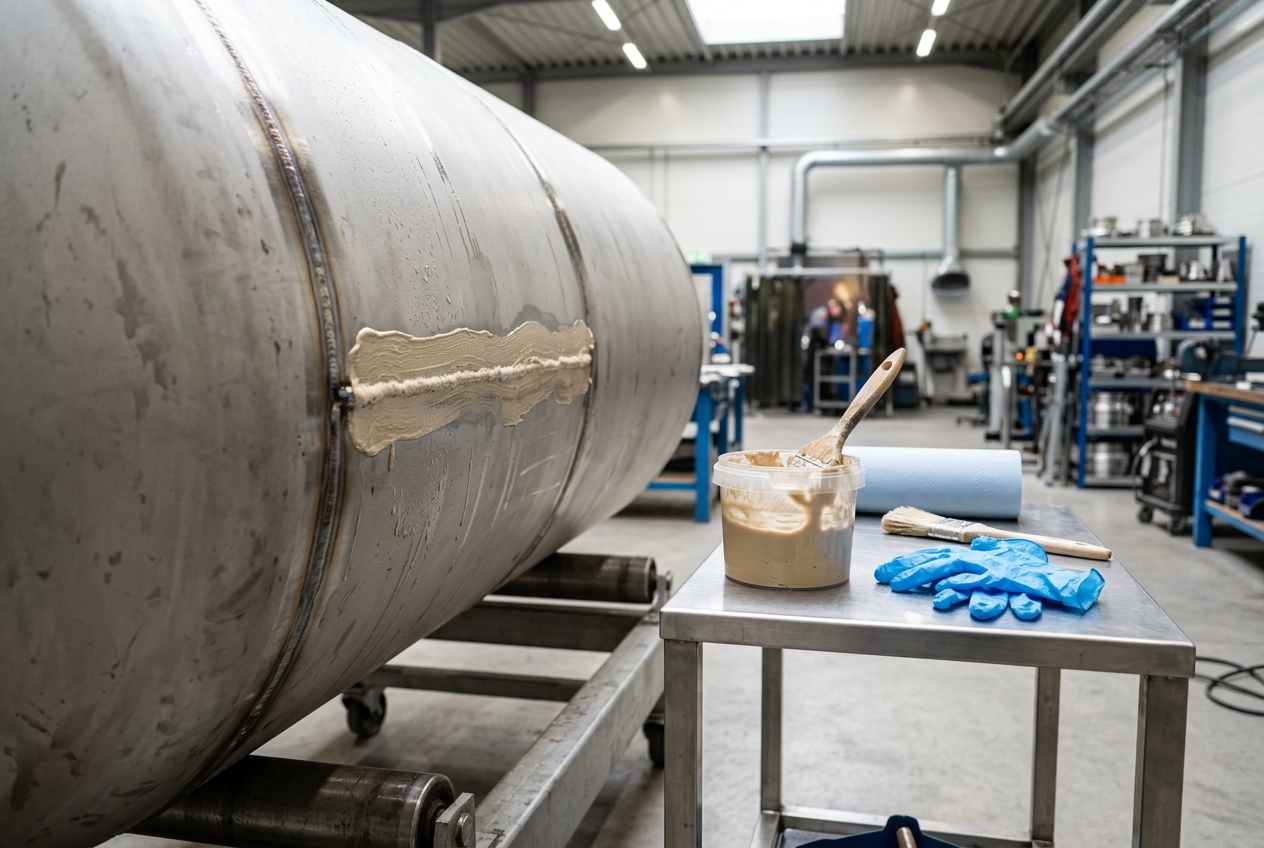
- Pickle. An acid pickle removes heat tint, scale and the chromium depleted layer. Paste for welds, immersion or spray for whole items.
- Passivate. Restores a uniform, fully formed chromium oxide film.
- Rinse and verify. Rinse thoroughly with clean water, and check with a ferroxyl or water break test where the duty justifies it.
Prevention is cheaper
Keep stainless tooling, consumables and storage strictly separate from carbon steel. Use stainless wire brushes, dedicated grinding discs, and never store stainless on bare carbon racking.
We can supply plate with protective film, and advise on finish and surface condition when the duty is corrosive enough for it to matter.
Stainless SteelFabricationCorrosion