Not every wear problem is an abrasion problem. If your chute is blocking, your hopper is rat-holing or material is freezing to the walls in humid weather, a harder steel liner will not fix it.
What UHMW-PE does well
Ultra high molecular weight polyethylene has a very low coefficient of friction and almost nothing sticks to it. In bulk handling that translates into:
- Flow. Material slides instead of hanging up — the usual cure for blocked transfer points and sticky, damp fines.
- Sliding abrasion resistance. In fine, dry, low impact sliding duty it can outlast mild steel comfortably.
- Noise and weight. Significantly quieter than steel, and a fraction of the weight, so liners can be changed by hand.
- No corrosion. It is unaffected by water and most chemicals.
Where steel still wins
- Heavy impact. Rock dropping from height will punch through polymer. Use wear plate at impact points and polymer below them.
- Heat. UHMW-PE is limited to roughly 80 °C continuous and will creep under sustained load.
- Gouging and large lump sizes. Hardened plate, every time.
- Structural duty. Polymer liners are liners; they carry nothing.
The combination most plants end up with
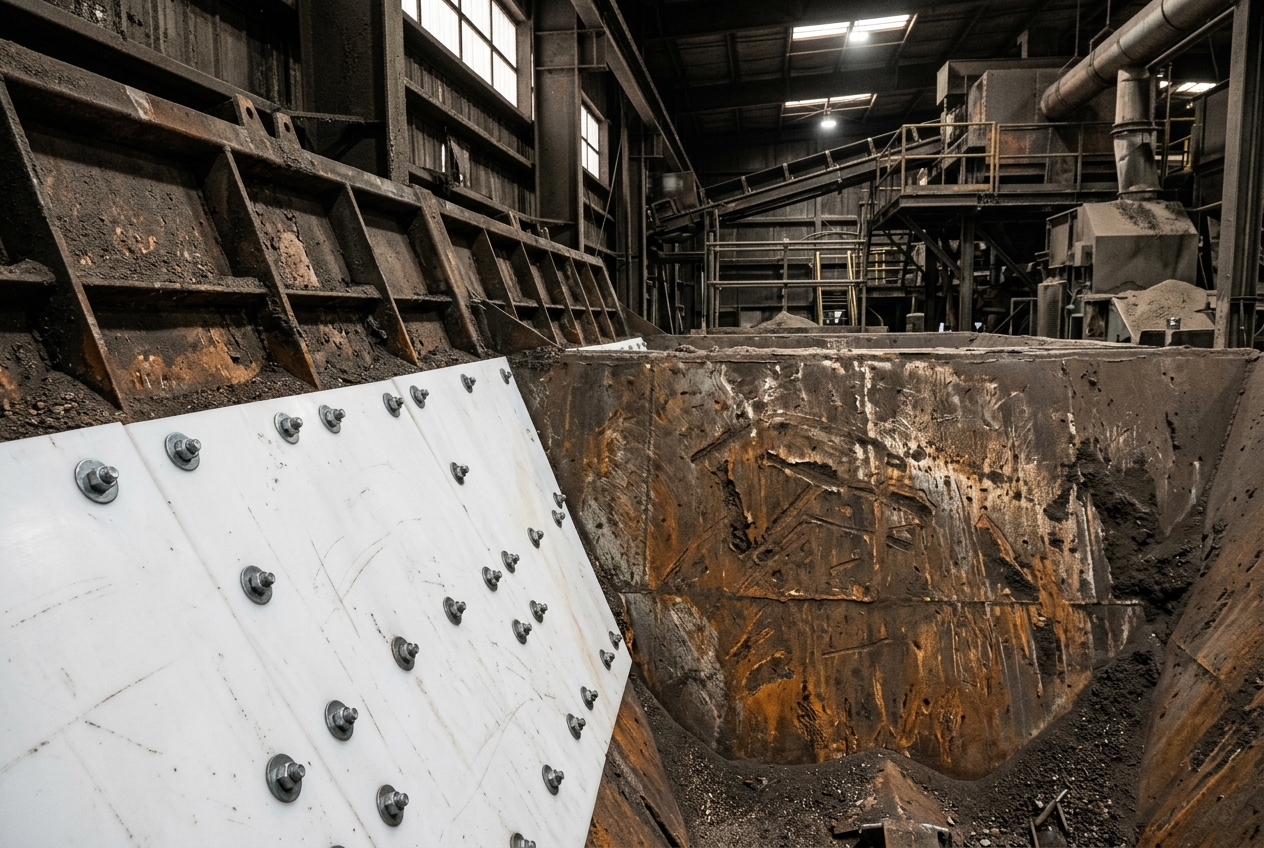
Wear plate at the impact zone, UHMW-PE through the sliding and discharge sections, bolted on with countersunk fixings so nothing protrudes into the flow. It usually costs less than an all-steel rebuild and solves the blockage at the same time.
We supply both, and will look at your transfer point geometry before you order either.
UHMW-PEWear Resistant SteelBulk Handling