A drawing that says "cut to size" leaves the most expensive decisions to whoever happens to be running the machine. A few lines of specification prevent most fit-up arguments.
Pick the process for the job
- Laser. Tightest tolerance and a square, clean edge; best on thinner stainless and carbon plate. Limited by thickness and reflectivity.
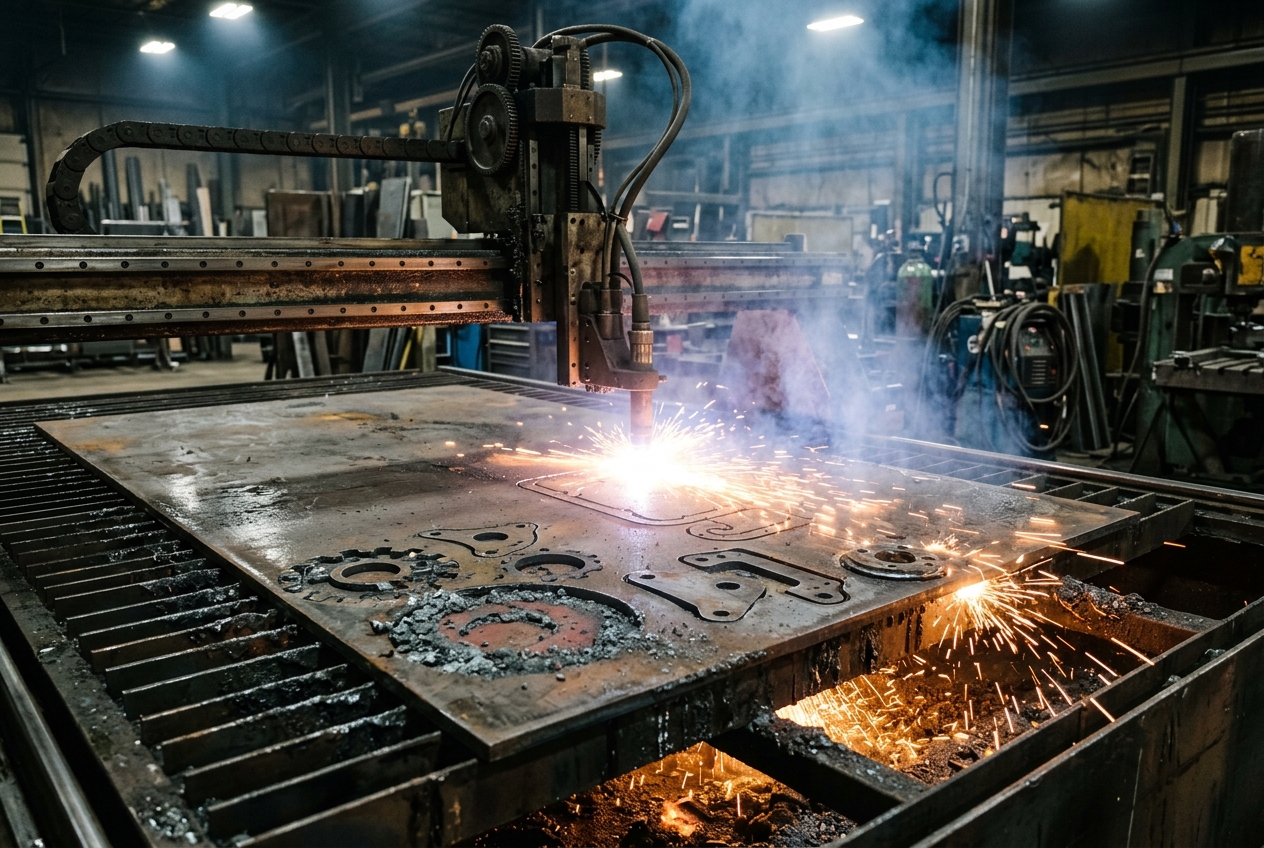
- Plasma. Fast and economical through mid and heavy thickness. Expect a small bevel angle on the cut face and a heat affected edge.
- Waterjet. No heat input at all, so no hardness change at the edge. The right call for hardened, armour and clad plate, and slower than the others.
- Oxy-fuel. Heavy carbon steel thickness, wide kerf, large heat affected zone.
State these four things
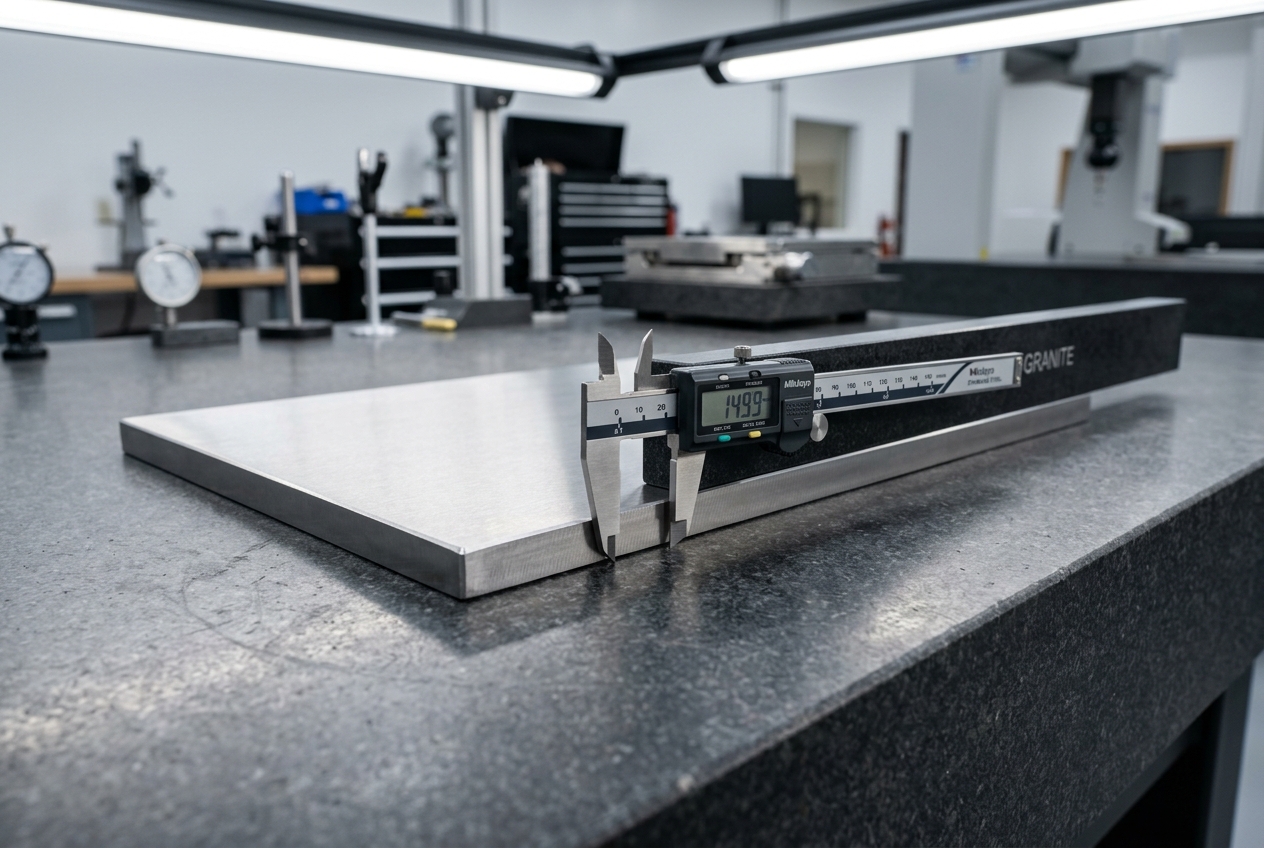
- Profile tolerance — the class or an explicit dimension tolerance.
- Edge condition — as cut, deslagged, ground, or prepared with a weld bevel and angle.
- Squareness — matters as soon as parts are stacked or welded in a jig.
- Marking — whether heat number and part identity must be transferred to each piece.
Where allowances save money
Leave a machining allowance only where you will actually machine. Blanket allowances across a nest add weight, cutting time and deburring on every single part.
Send us the DXF with the process and tolerance class, and we will tell you whether your tolerance is achievable in that grade and thickness before anything is cut.
CuttingFabricationTolerances