In the Gulf, seawater is hot, saline and usually chlorinated — the hardest combination there is for stainless steels. Titanium is one of the few materials that simply does not care.
Why titanium wins in this duty
Commercially pure Grade 2 forms a tenacious titanium dioxide film and is effectively immune to pitting, crevice corrosion and chloride stress corrosion cracking in seawater, including chlorinated seawater, across the temperature range desalination plants operate in. It is also roughly half the density of steel, so a titanium tube bundle weighs far less than its alloy equivalent.
Where it is normally used
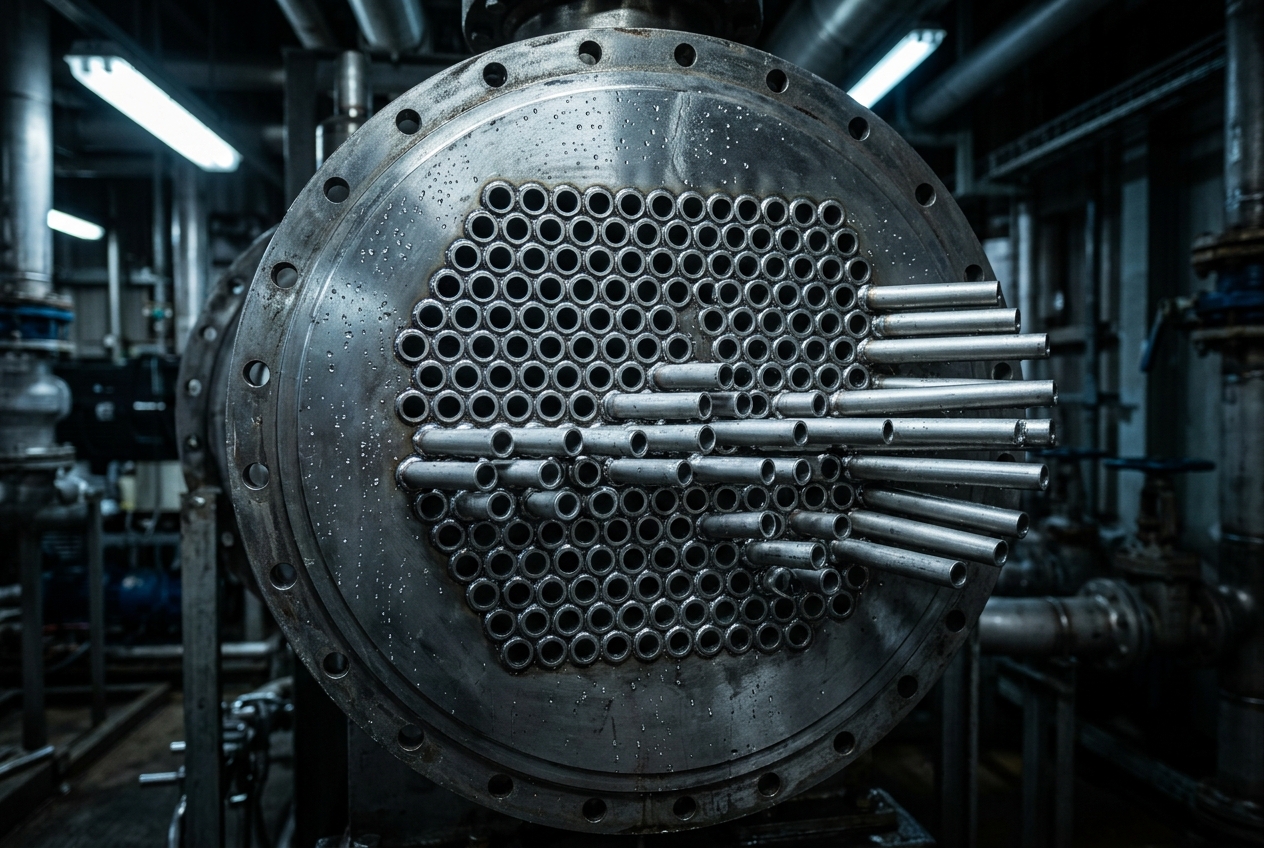
- Plate and tube in seawater heat exchangers and MSF/MED desalination units
- Titanium plate heat exchangers on seawater cooling duty
- Chlorination and hypochlorite handling equipment
- Seawater intake and reject components where the alloy option has already failed
Where it is the wrong answer
- Dry chlorine gas and some anhydrous conditions, where it can react aggressively
- Reducing acids without an inhibitor present
- Duties needing high strength in thin sections — Grade 2 is comparatively soft; Grade 5 (Ti-6Al-4V) covers that, with different corrosion behaviour
Making the economics work
Compare installed cost, not kilo price. Titanium's low density means fewer kilos for the same geometry, and thin-wall welded tube is a mature, economical product. Then weigh in tube bundle replacement intervals: a bundle that lasts the life of the plant changes the calculation entirely.
Fabrication needs care — clean, inert gas shielded welding and strict separation from iron contamination — but it is routine work for shops that do it regularly.
We stock Grade 2 and Grade 5 in plate, sheet, bar and tube. Send the duty and we will tell you honestly whether super duplex would be sufficient.