Quenched and tempered wear plate gets its hardness from a controlled heat treatment. Welding puts heat back into it. Everything about good practice here is about limiting how much, and how fast it leaves.
The three things that matter
- Preheat. It slows the cooling rate and lets hydrogen escape before it can cause cold cracking. Requirements rise with plate thickness, carbon equivalent and joint restraint. Thin plate in a free joint may need none; thick, restrained joints always do.
- Interpass temperature. Letting the joint get too hot over many passes over-tempers a wide band next to the weld. That soft band is where your liner will wear through first.
- Consumables. Use low hydrogen electrodes and keep them dry. A matching strength consumable is usually unnecessary — most wear liners are not structural, and a softer, tougher weld metal behaves better.
What goes wrong in practice
- Welding straight onto cold plate first thing in the morning, with no preheat.
- Chasing a high deposition rate so the joint never cools between passes.
- Grinding the cut edge away so the weld sits on a harder, uncontrolled surface.
- Tacking a stiff assembly solid before any full passes, so restraint is at its worst.
A simple shop discipline
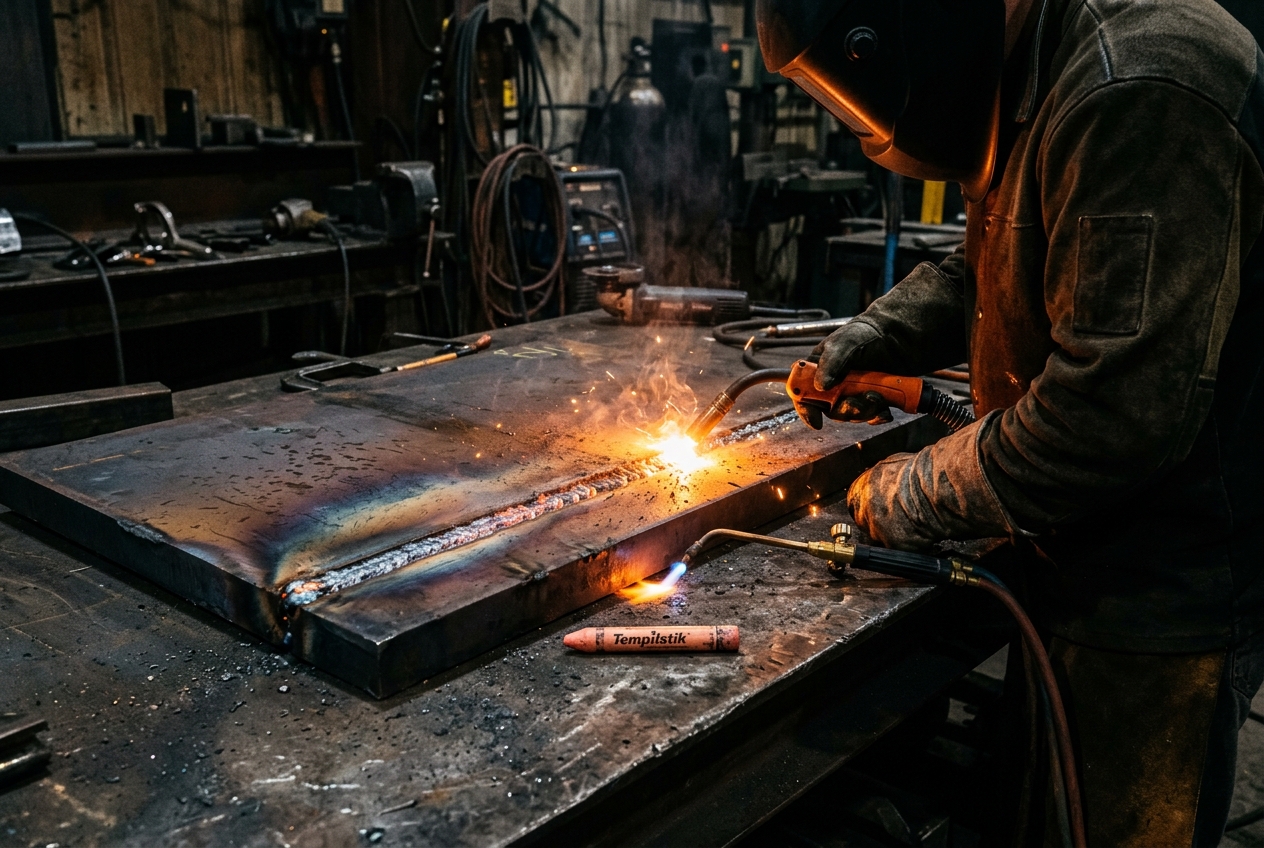
Set a preheat and interpass window for each thickness you use, write it on the drawing, and check it with a temperature crayon or contact thermometer rather than by eye. It takes a minute and protects the whole liner.
We supply preheat and interpass guidance with the plate, and will review a joint detail with you before you cut.
Wear Resistant SteelWeldingFabrication